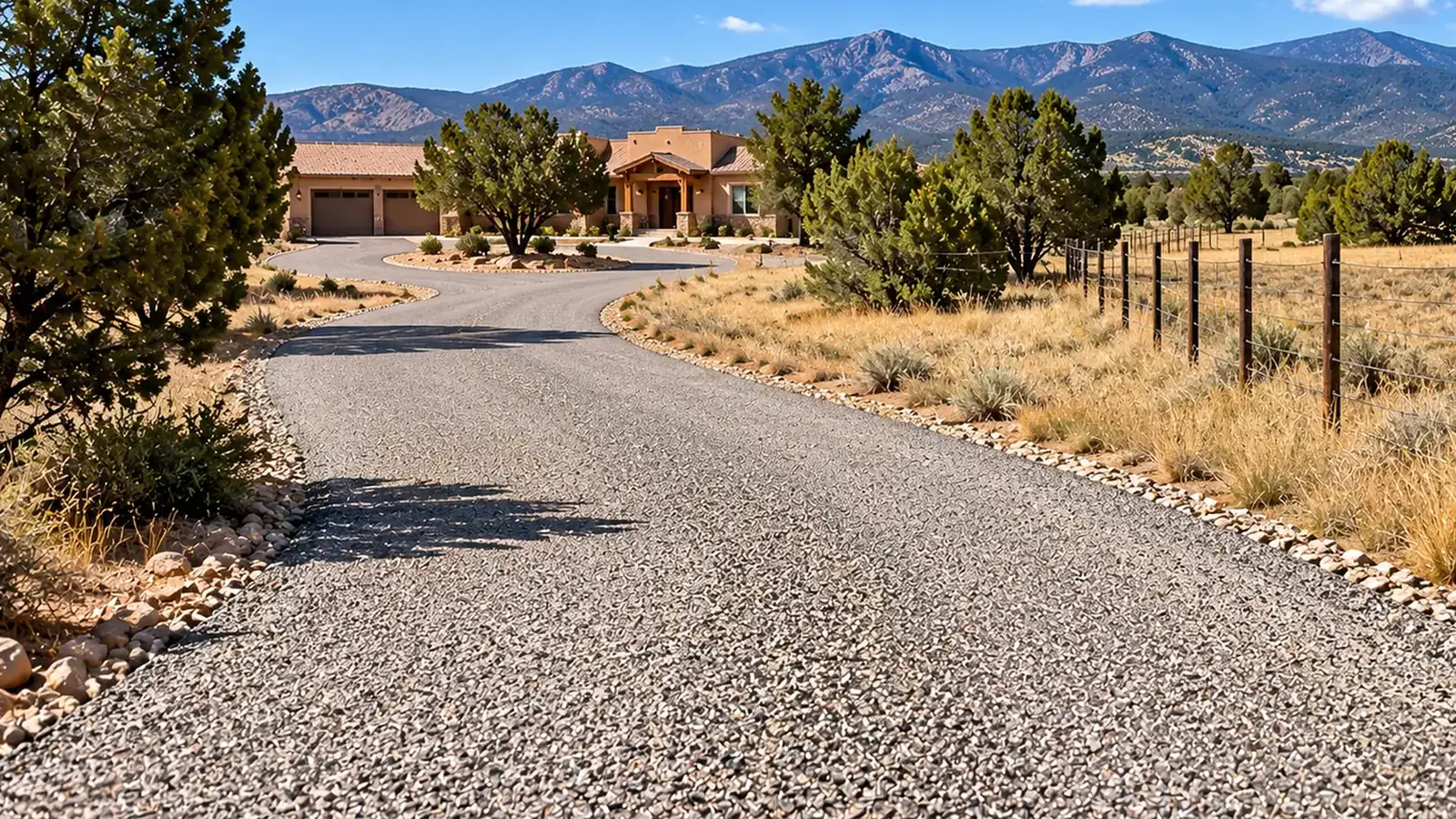
Side by side
| Asphalt | Chip seal | Millings | Gravel | |
|---|---|---|---|---|
| Cost per foot | Highest | Medium | Lower | Lowest |
| Dust | None | None | Low | High |
| Smoothness | Smooth | Textured | Firm, slightly rough | Loose |
| Upkeep | Sealcoat every 2–3 yrs | Renewal coat every several yrs | Occasional regrade | Constant regrading |
| Best spot | House and turnaround | Long runs | Long runs, yards | Temporary |
Why sand changes the plan
Loose mesa sand doesn't hold shape. Whatever you put on top needs a crowned, compacted base underneath and support at the edges, or it ruts and crumbles. That base is where most of the value is.
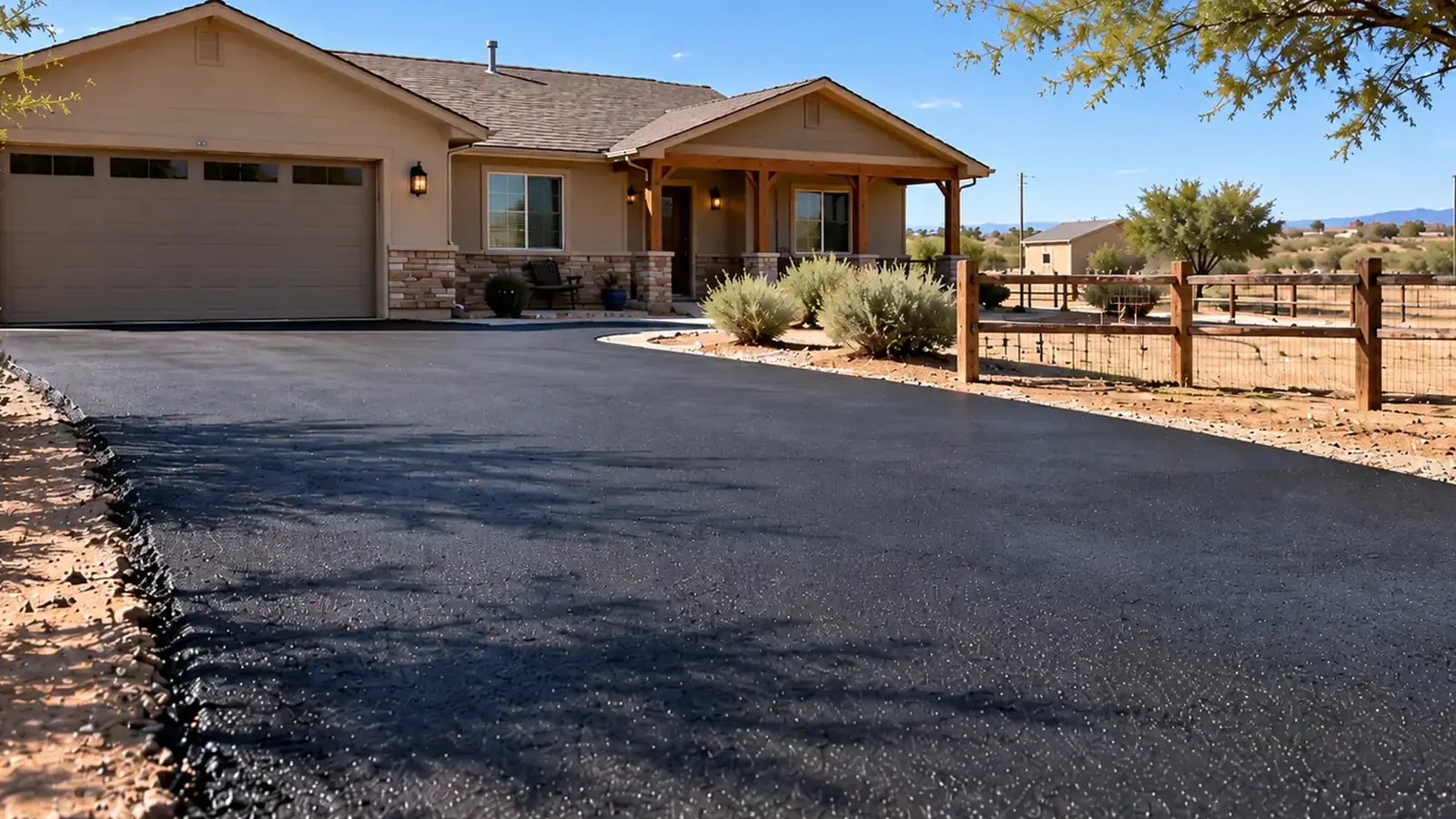
A common layout
- Asphalt for the parking area, turnaround and garage approach
- Chip seal or millings for the drive out to the road
- A firm, defined end where the drive meets the dirt road
- A swale or culvert where storm water crosses
Upgrading later
Millings and chip seal both make good bases for asphalt later, so you can start with the budget surface and pave more as you go.
Common questions
What's the best value for a 300-foot drive?
Often millings or chip seal on the run, with asphalt at the house.
Does chip seal hold up on sand?
Yes, on a compacted base.
Is gravel ever a good choice?
As a temporary surface during construction, yes.