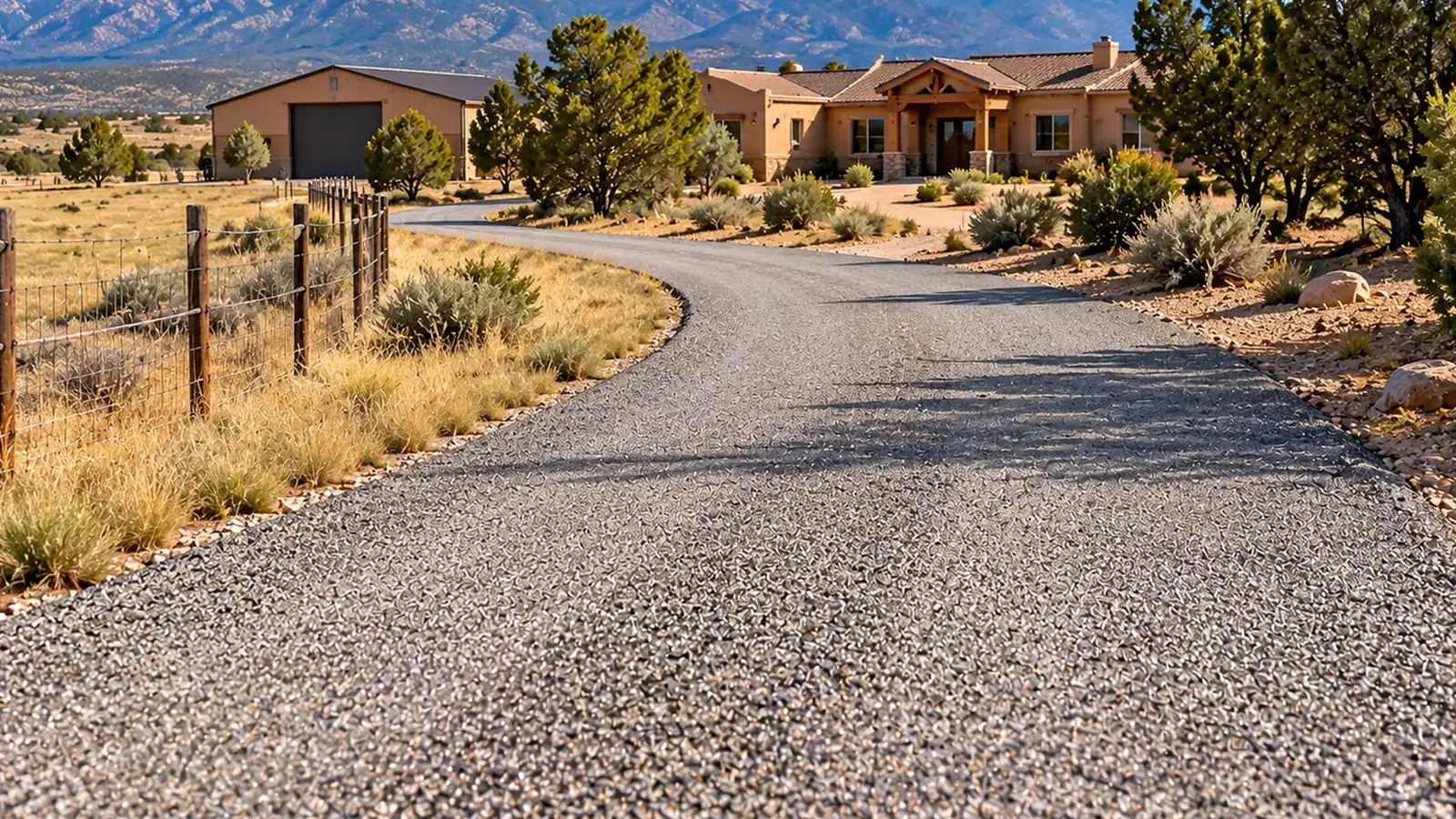
Valley farm country
From Bosque Farms down through Peralta, Los Chávez, Belen and Jarales, the valley floor is full of small farms, horse properties and hay fields. Drives run along field edges and irrigation ditches, and trucks, trailers and tractors use them every day. The ground is flat and often damp near the ditches, which is exactly the setting where gravel ruts and dirt turns to mud.
Matching the surface to the use
| Area | Usual surface |
|---|---|
| House parking and turnaround | Asphalt |
| Main lane to the road | Chip seal or asphalt |
| Barn approach and aisles outside | Compacted millings |
| Hay, trailer and equipment parking | Millings or heavy-section asphalt |
| Field roads | Regraded and crowned, millings where needed |
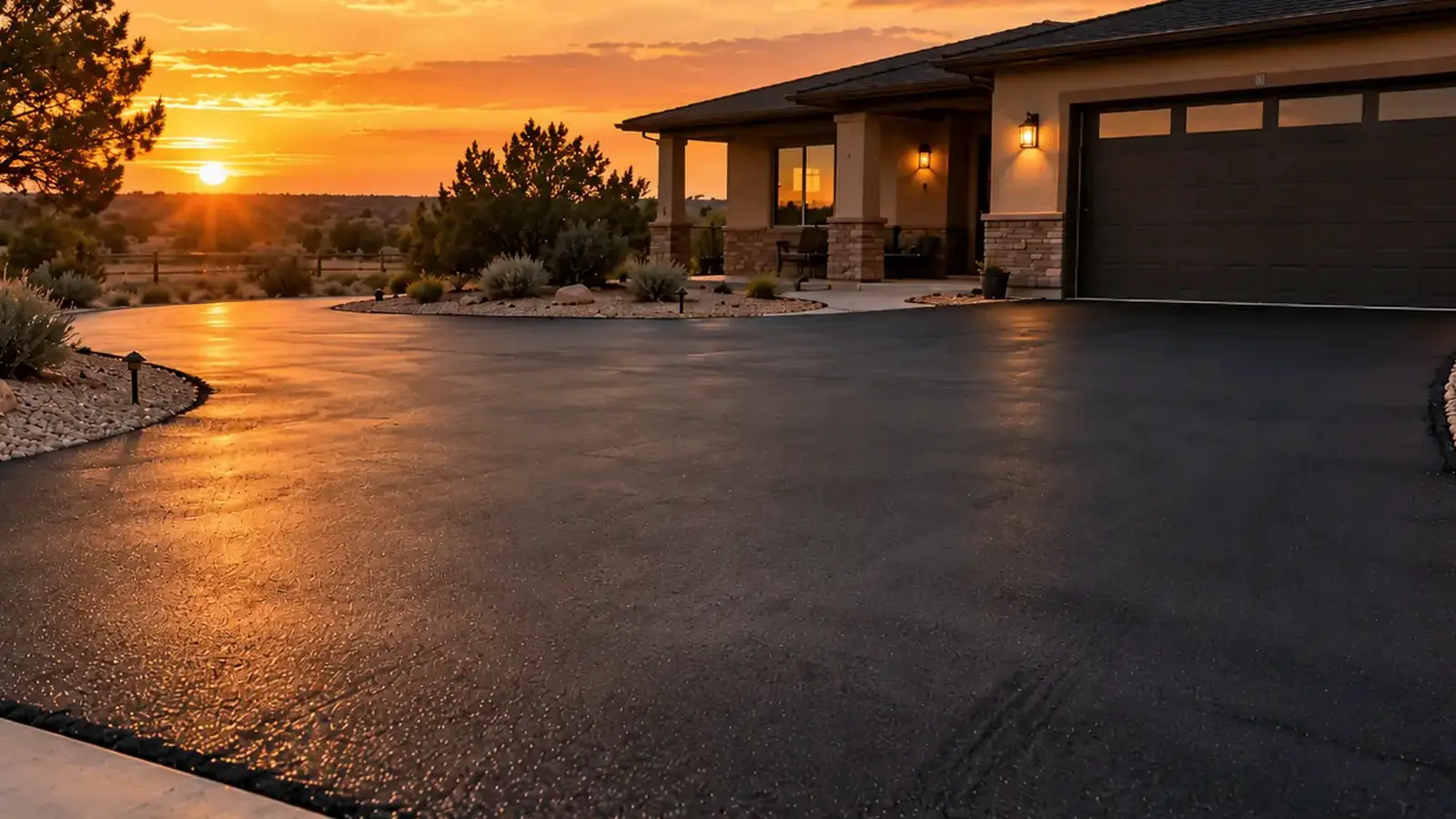
Built for wet ground
- Dig out soft soil and organic material before placing base.
- Thicker base where the ground stays damp from irrigation.
- Raise and crown lanes slightly so water drains off.
- Keep pavement and fill off ditch banks; plan crossings properly.
Heavy equipment
Where tractors turn and trucks back in, we build a heavier section so the surface doesn't rut. Steel-tracked or lugged equipment is hard on any paved surface; we'll suggest where millings make more sense.
Common questions
What surface is best near horses?
Many owners use compacted millings around barns and paddock gates, with asphalt where vehicles turn most.
Can you pave next to an irrigation ditch?
We keep pavement and fill off ditch banks and easements. Crossings usually need permission from the irrigation district.
Can you handle a long lane?
Yes — usually a mix of asphalt near the house and chip seal or millings on the run.