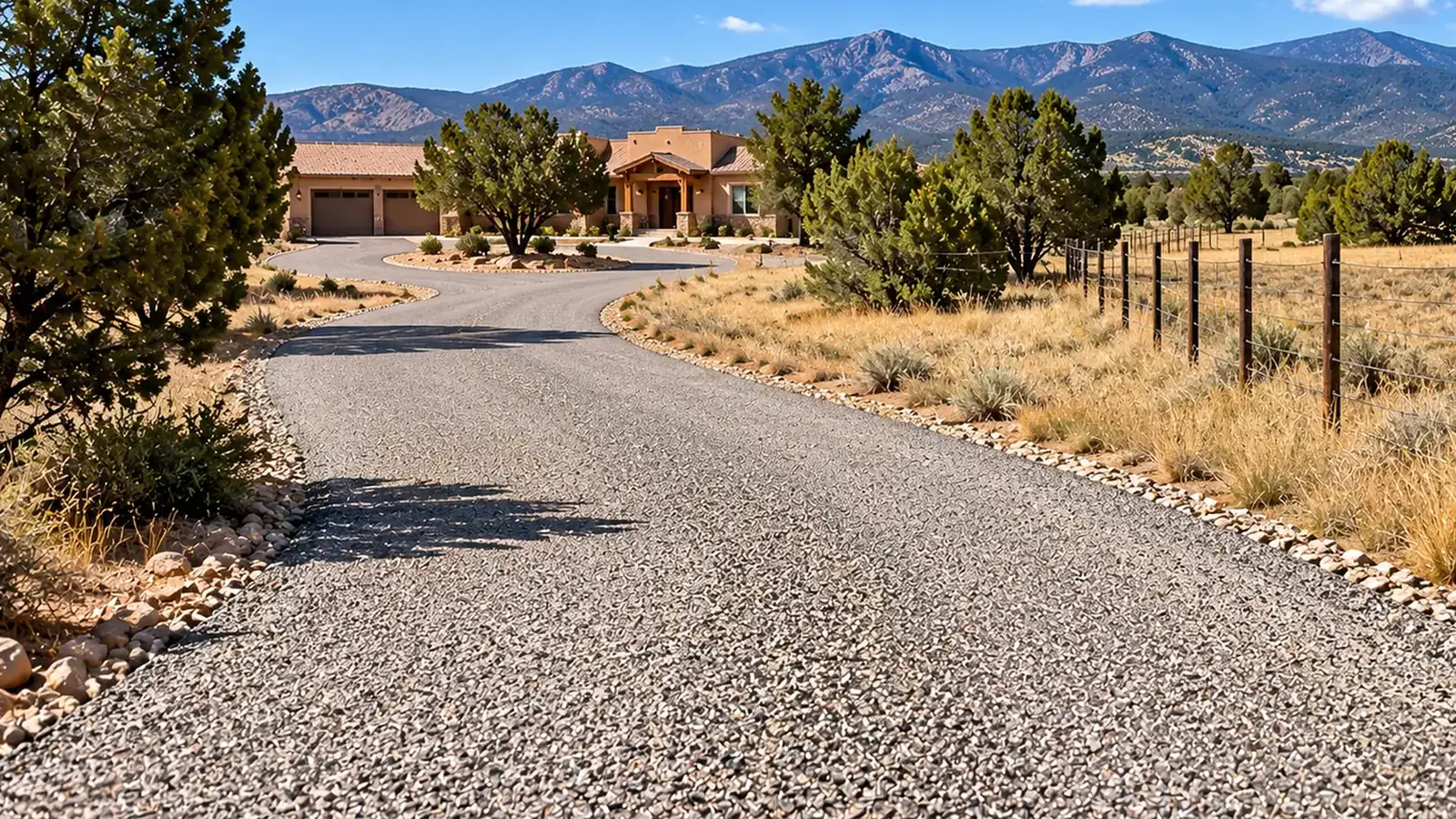
Living on the mesa
East of the river, Meadow Lake and El Cerro Mission spread across a wide sandy mesa. West of town, Rio Grande Estates does the same off NM-6. Lots are big, many roads are dirt, and sand moves every time the wind picks up. A driveway out here has a tough job: the road keeps dragging sand onto it, and storms send water across lots with nothing to slow it down.
What works
- Asphalt at the house. Parking area, turnaround and garage approach — the part you live with every day. See asphalt driveways.
- Millings or chip seal toward the road. Firm and low-dust for far less per foot. See millings and chip seal.
- A solid end at the road. A compacted transition so the driveway doesn't break down where it meets the dirt.
- Compacted, supported edges. Loose sand beside pavement is what lets edges crumble.
- A path for storm water. So the driveway doesn't become the drainage channel.
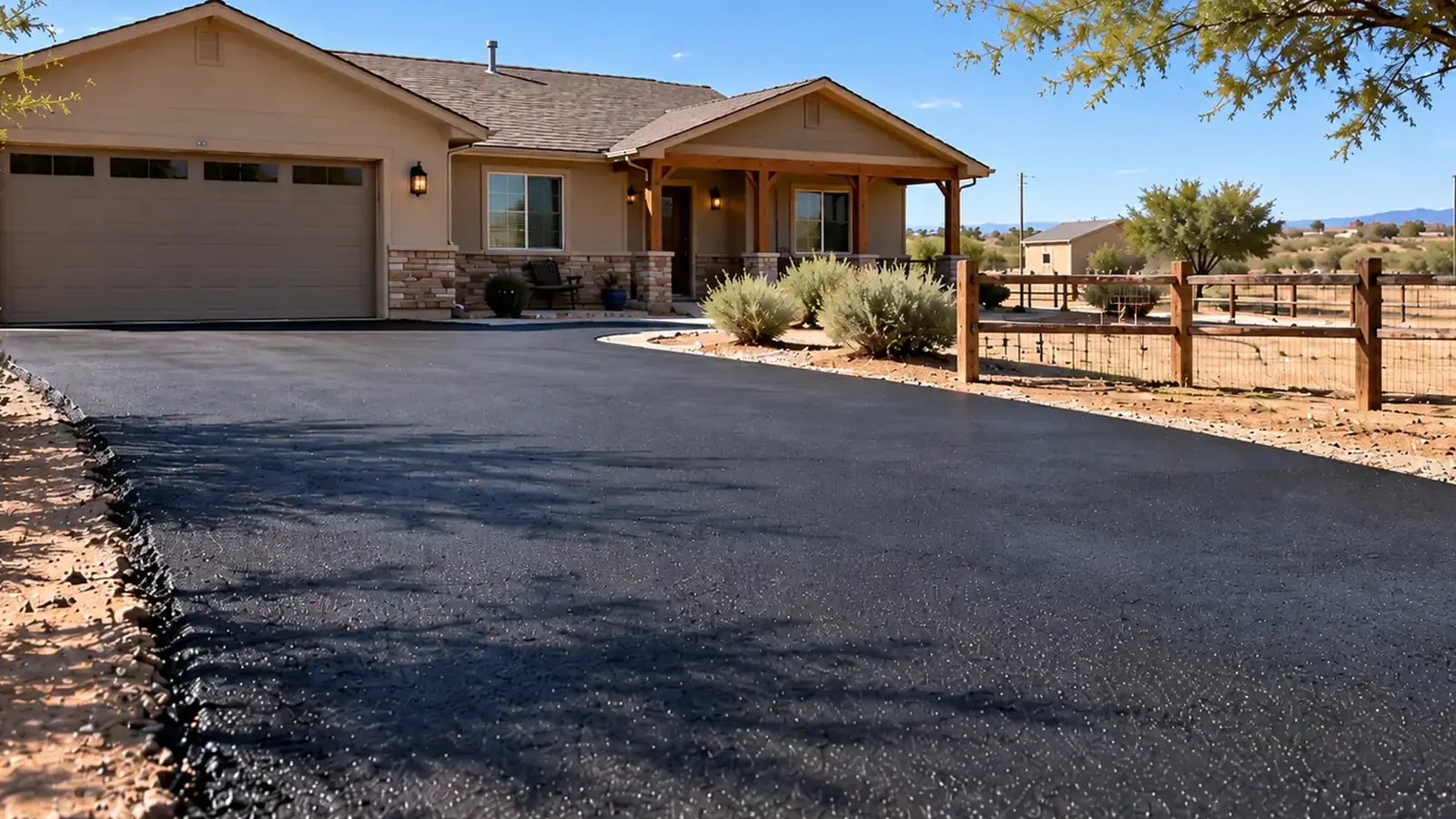
Building a new home?
Rough-grade the drive during construction so trucks have a stable path, then pave once the heavy deliveries are done. That avoids damage to fresh asphalt before you move in.
For a deeper comparison, see mesa lot driveway surfaces.
Common questions
Is it worth paving if the road is dirt?
Usually yes, near the house. You'll cut most of the dust and mud. Millings or chip seal toward the road keep cost down.
Can you pave the road in front of my lot?
Public roads are maintained by the county or village. We pave your driveway and private shared lanes.
What's the cheapest upgrade that really helps?
A crowned, compacted base topped with recycled millings.