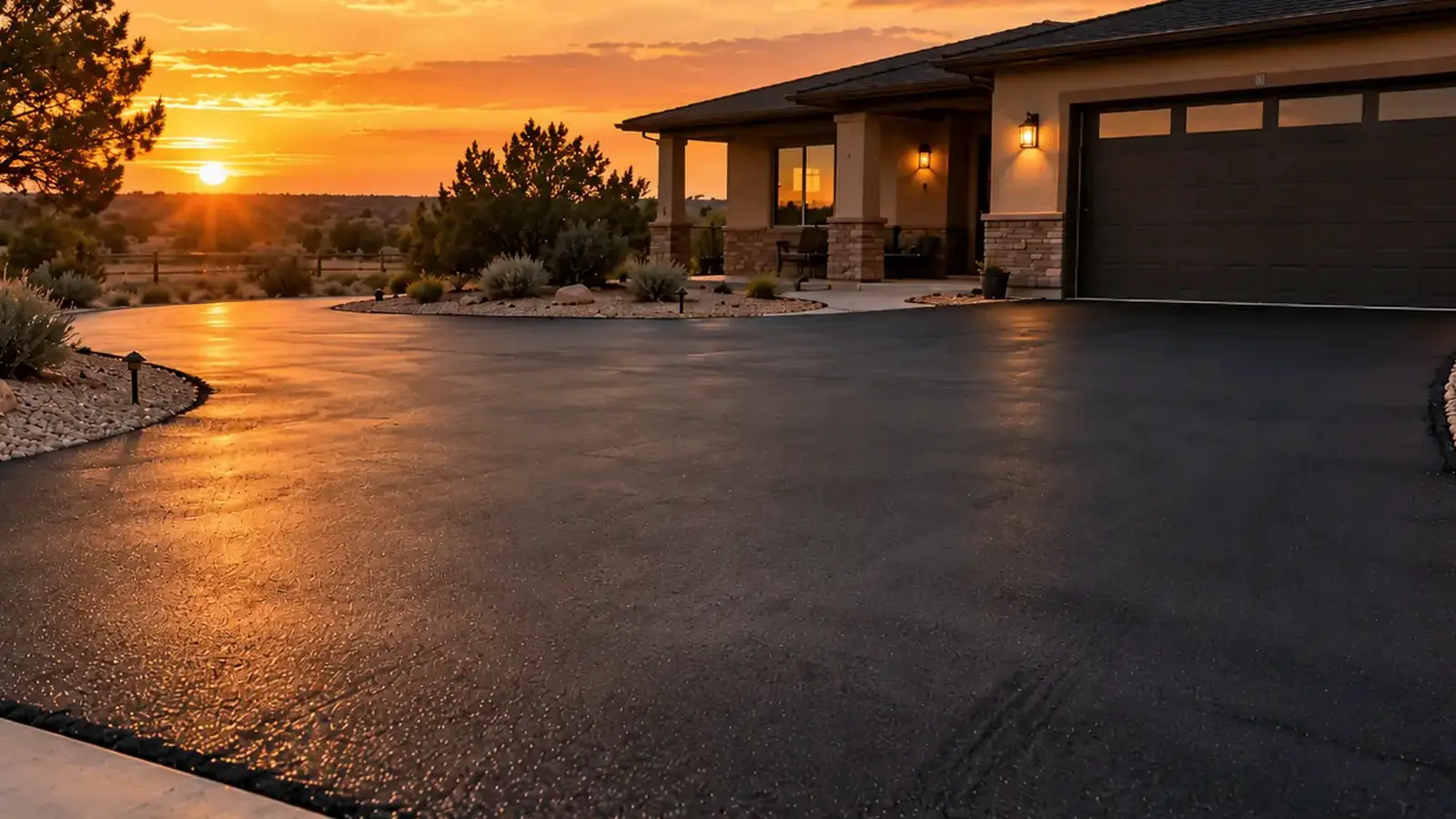
Room for the big stuff
Plenty of Valencia County properties have a shop, a stock trailer, an RV or a work truck that needs a real place to park. On dirt or sand, those spots rut, sink and turn to mud. A paved pad or apron fixes that — as long as it's built for the weight.
Built heavier
- Deeper base under the wheels and jacks.
- Thicker asphalt so it doesn't rut.
- Room to maneuver — enough width and turning room to back a trailer in.
- Clean tie-ins to the shop slab, driveway or road.
- Drainage away from the shop door and the house.
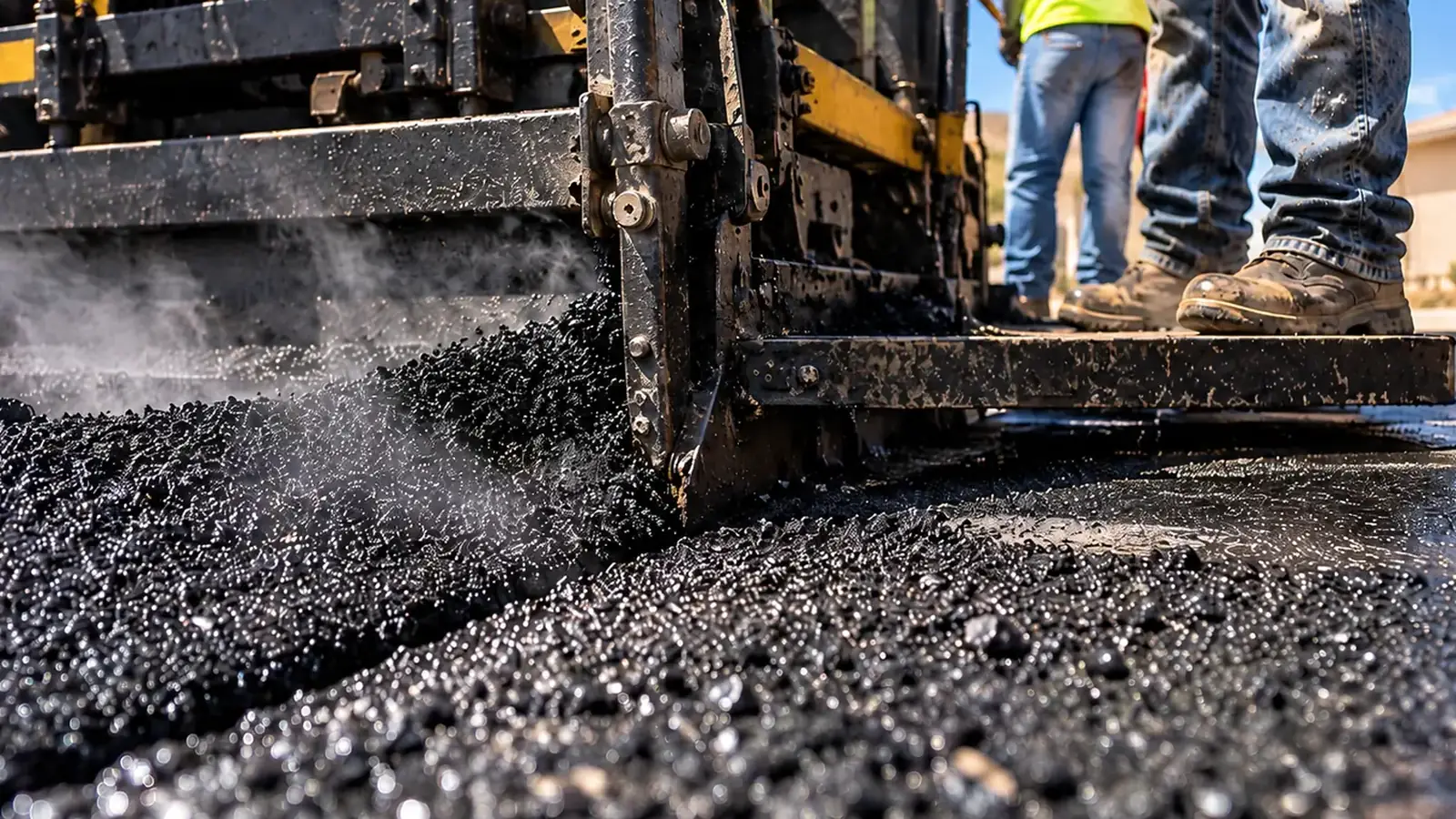
Summer heat
In hot weather, small jack feet and kickstands can press into any asphalt. Use jack pads or boards, and avoid turning wheels in place on new pavement. See new asphalt in summer heat.
Budget option
For big trailer and equipment yards, compacted millings give a firm surface at a lower cost, with asphalt only where trucks turn most.
Common questions
How thick should an RV pad be?
Thicker than a car driveway in both base and asphalt; exact depth depends on the vehicle and soil.
Will jacks sink into asphalt?
Small jack feet can in hot weather. Use jack pads or boards.
Can you pave a shop apron?
Yes — with a smooth tie-in to the slab and drainage away from the door.