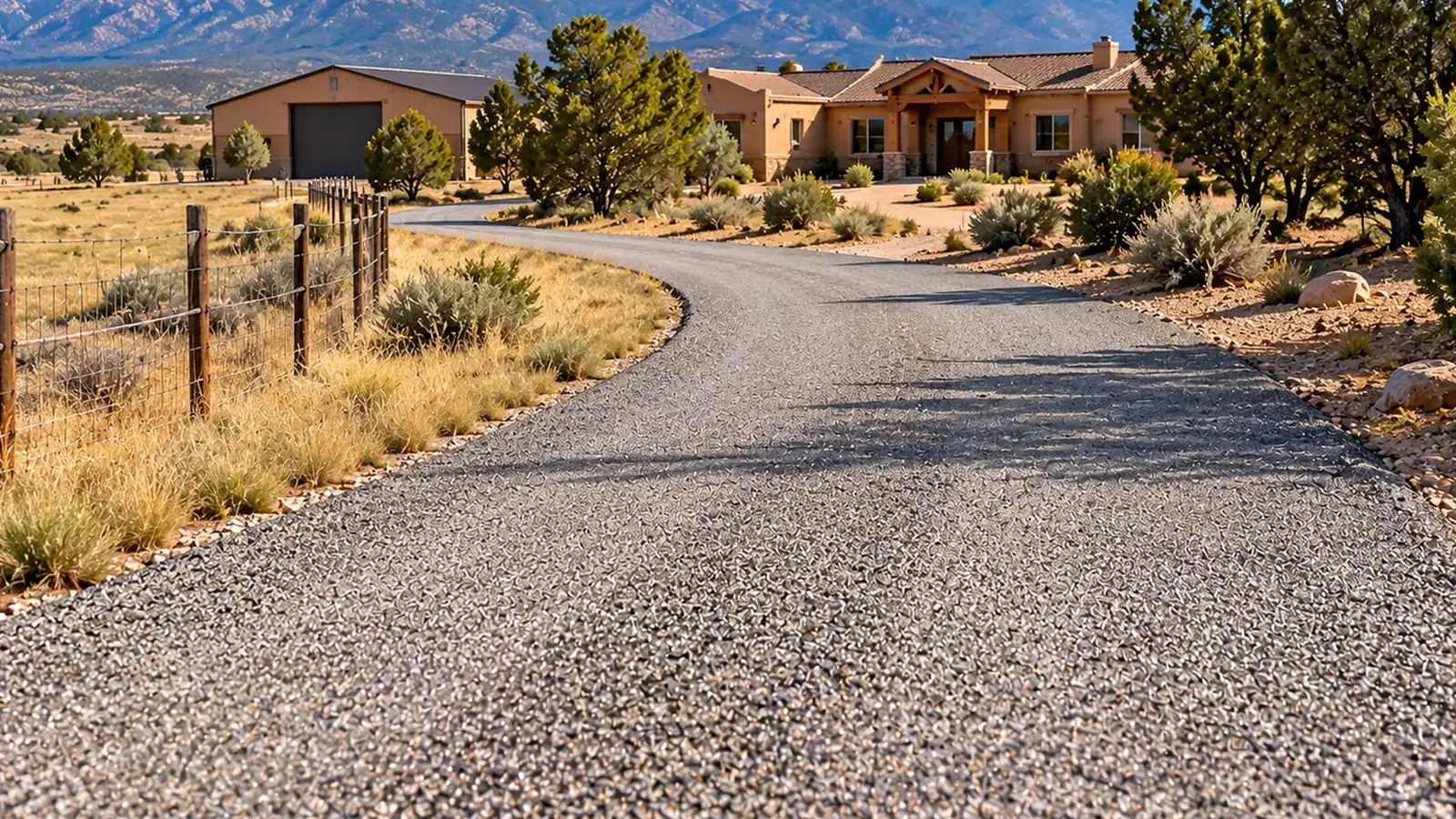
How chip seal works
We grade and compact a base, spray hot liquid asphalt over it, and immediately spread crushed stone that gets rolled into the binder. The binder seals the surface and holds the stone. Two layers — a double chip seal — is the usual build when going from dirt or gravel.
Why it fits Valencia County
- Long distances. Farm lanes and mesa-lot drives can be hundreds of feet. Chip seal keeps the cost reasonable.
- Dust and mud control. A sealed surface instead of loose sand or dirt.
- Traction. The stone texture grips well, wet or dry.
- Rural look. Stone tones fit farm and ranch properties.
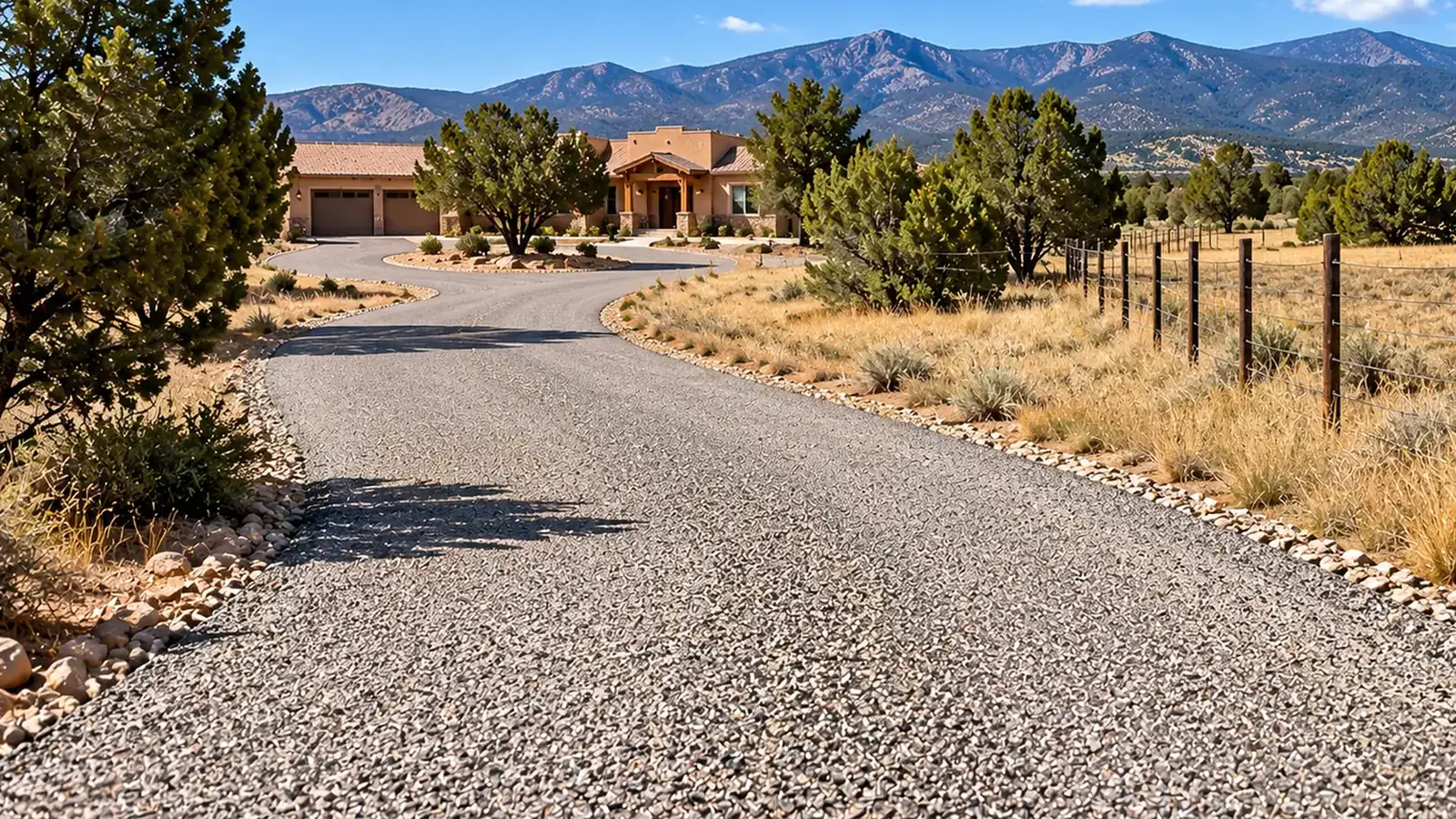
Good to know
- A little loose stone is normal at first; we sweep the excess after it cures.
- Avoid sharp turning in place on new chip seal.
- A renewal coat every several years keeps it sealed.
- It's rougher than asphalt — many owners pave the area right around the house.
Our process
- Grade, crown and compact the base; fix drainage and crossings
- Spray hot binder at the right rate
- Spread clean crushed stone right behind it
- Roll to seat the stone
- Sweep loose stone after curing
Common questions
How long does chip seal last?
A well-built double chip seal commonly lasts several years before a renewal coat.
Is it good for a long farm lane?
Very often — it's one of the most cost-effective sealed surfaces for long runs.
Can it be paved over later?
Yes. It makes a good base for future asphalt.