Water in the valley, water on the mesa
Valencia County's farm valley is laced with irrigation ditches and laterals. Many driveways have to cross one to reach the road, and those crossings are where pavement fails first: undersized pipes, settled fill, and asphalt cracking where it bridges the ditch. Up on the mesas, the problem is storm runoff crossing the drive and cutting the edges.
Irrigation ditch crossings
Ditches in the valley are typically managed by an irrigation district — in the middle Rio Grande valley, often the Middle Rio Grande Conservancy District. Building or changing a crossing usually requires the district's permission and may have requirements for pipe size and how the work is done. We'll help you find out what applies before any work starts. See our ditch crossing guide.
What we build
Culvert crossings
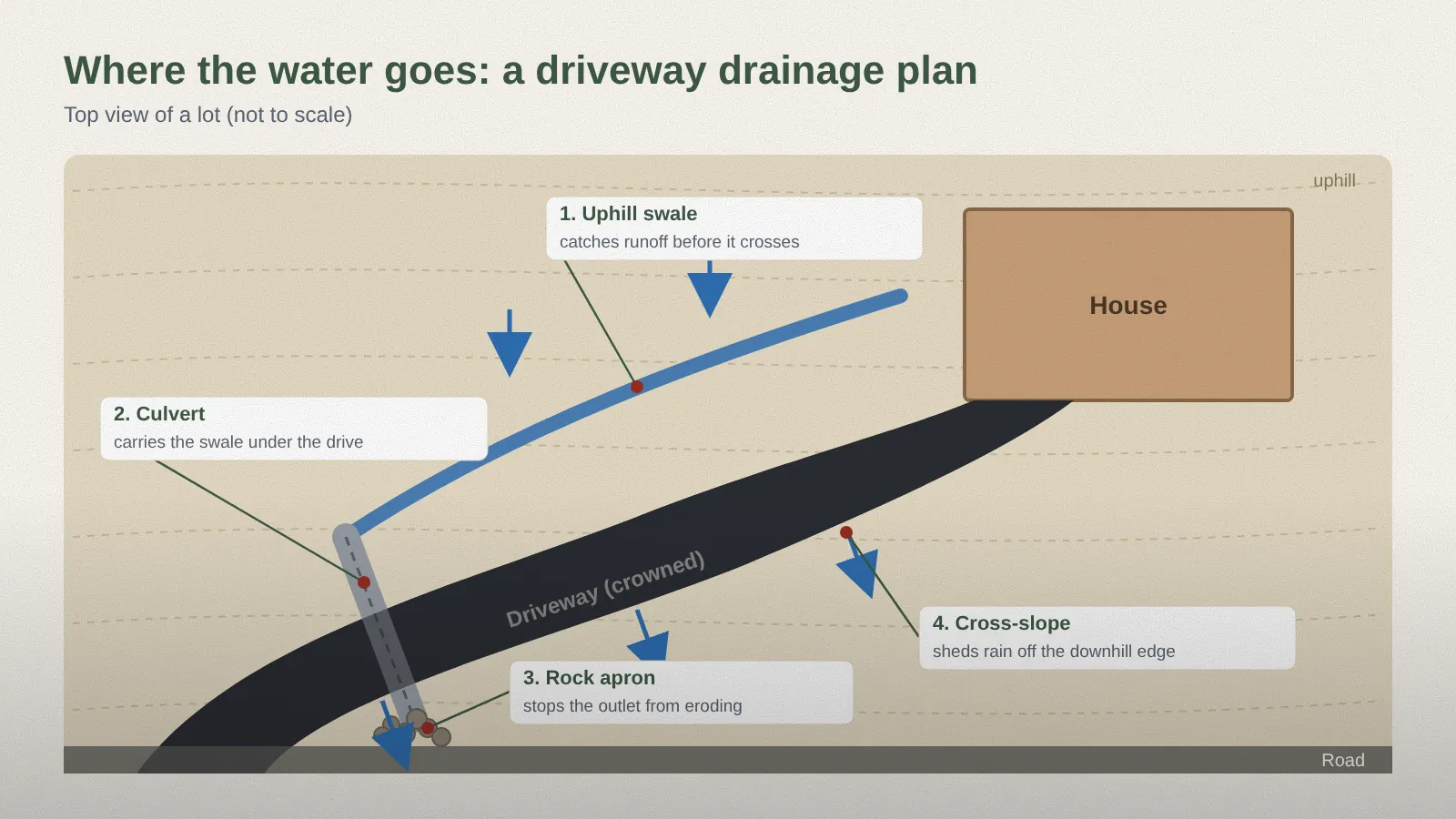
Pipe sized for the flow, bedded and backfilled in compacted lifts, with protected ends.
Swales
Shallow channels that collect runoff and lead it away from the drive.
Grading
Crown and cross-slope so rain and irrigation runoff leave the surface.
Erosion control
Rock at outlets and culvert ends so water doesn't cut new channels.
Pavement over a crossing
The fill over a culvert must be compacted in thin layers, or it settles and the asphalt above cracks into a dip. We rebuild failed crossings the right way and pave over them with a solid base.
Common questions
Do I need permission to cross an irrigation ditch?
Usually, from the irrigation district that manages it. We'll help you check before work starts.
Why does my driveway dip over the culvert?
The fill around the pipe wasn't compacted in layers and has settled. Rebuilding the crossing fixes it.
Can you fix storm water crossing my drive?
Yes — usually with a swale, a culvert and some regrading.