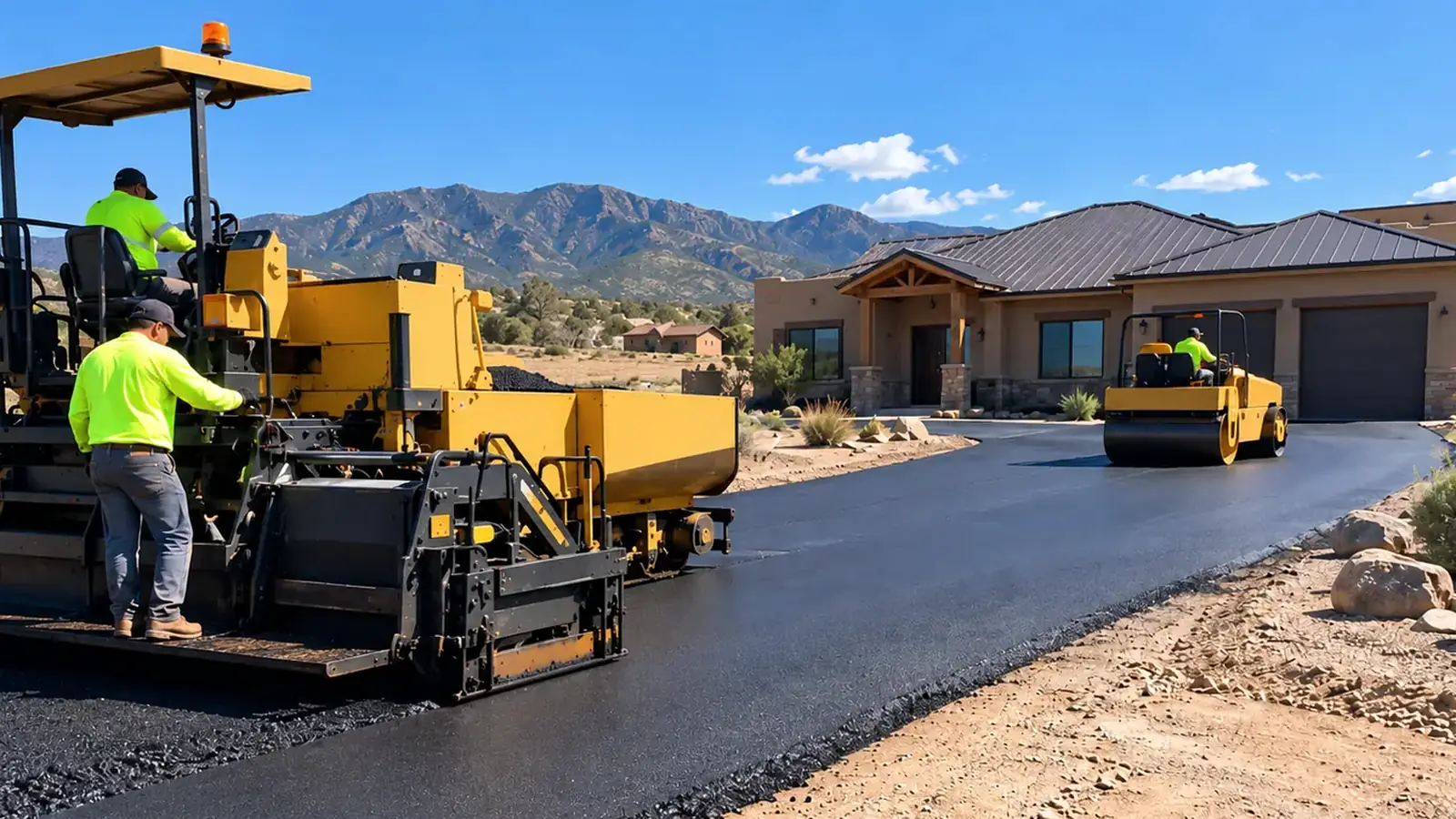
Two kinds of ground, one county
Los Lunas sits on the Rio Grande at around 4,850 feet, with farm country along the river and open mesas rising to the east and west. Down in the valley, soil is silty and holds water, especially near ditches and the bosque. Up on the mesas — Meadow Lake, El Cerro, Rio Grande Estates — it's loose sand. Each one breaks a driveway in a different way, so we build for whichever you have.
Valley lots
Soft, damp soil and flat ground. Remove the soft material, build a thicker base, and give water a slope to leave.
Mesa lots
Loose sand that shifts and washes. Dig to firmer ground, compact a solid base and support every edge.
The build, step by step
- Measure and plan. Layout, width, where trucks and trailers turn, and where water goes in a storm.
- Excavate. Topsoil, roots and soft or loose material out.
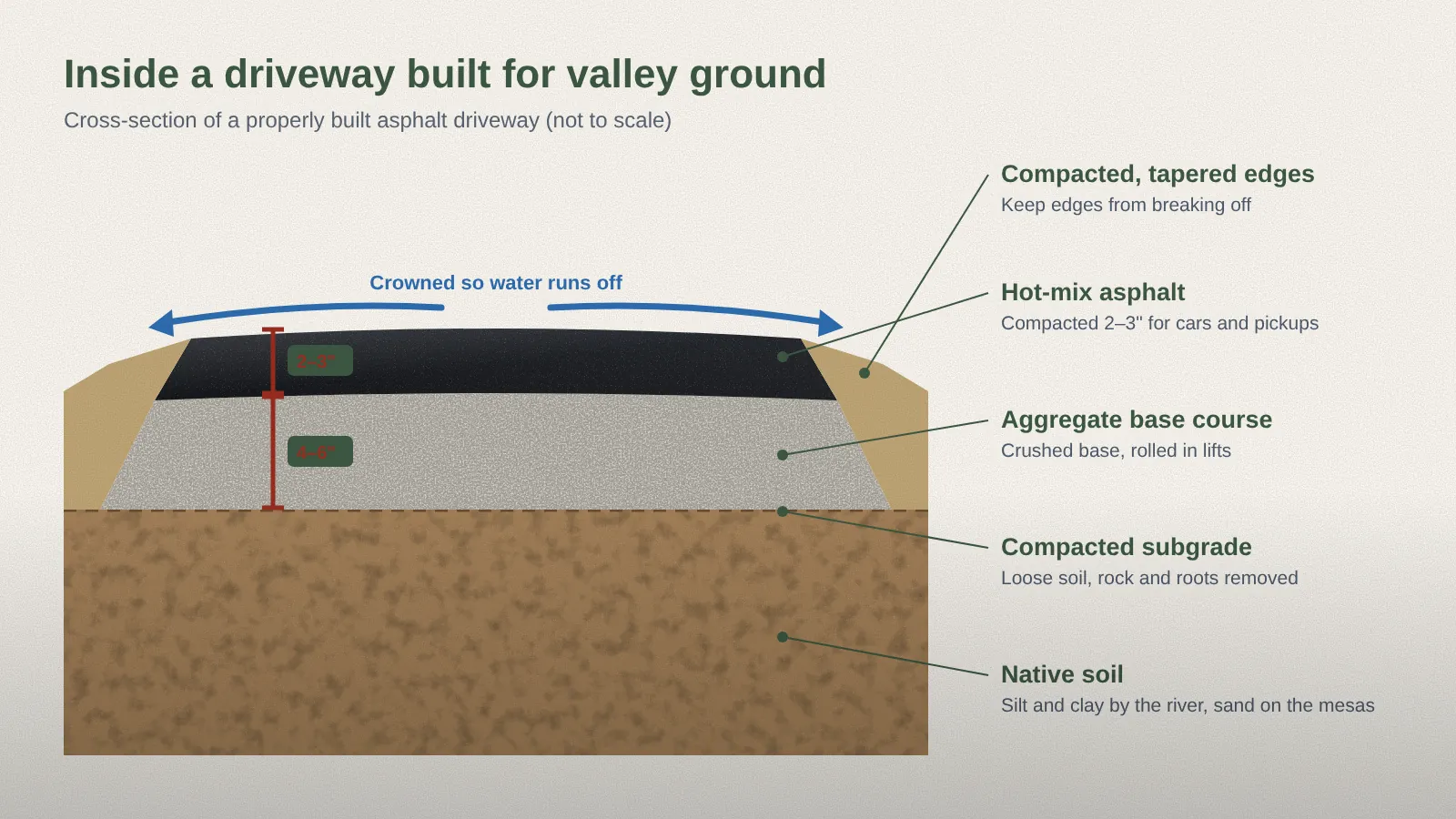
- Shape for drainage. A crown or cross-slope, plus a swale or culvert where water needs to cross.
- Base course. Crushed aggregate base, watered and rolled in lifts — usually 4–6 inches for homes, more on soft ground or for heavy trucks.
- Hot-mix asphalt. Compacted to 2–3 inches for most homes; thicker where trailers and work trucks go.
- Edges and tie-ins. Tapered, compacted edges and smooth transitions at the road and garage.
Heat matters here
The middle Rio Grande valley gets hot summers. Properly compacted asphalt handles it fine, but new asphalt is soft for its first few hot weeks. Avoid turning the wheel while parked and keep trailer jacks off it until it cures. Our summer heat tips cover the details.
Call (505) 207-9982 with your address and a rough driveway length for a ballpark. Typical ranges are in our Los Lunas price guide.
Common questions
How thick should my driveway be?
Most homes get 4–6 inches of compacted base and 2–3 inches of compacted asphalt. Soft valley soil and heavy vehicles call for more.
How long will it last?
With a good base, drainage and sealcoating every few years, 20 years or more is common.
When can I drive on it?
Usually after 2–3 days for cars. Keep heavy trucks and trailer jacks off it for a few weeks, especially in summer.
Do I need a permit?
Paving on private property usually doesn't. A new connection to a village, county or state road may need a permit. We'll check.