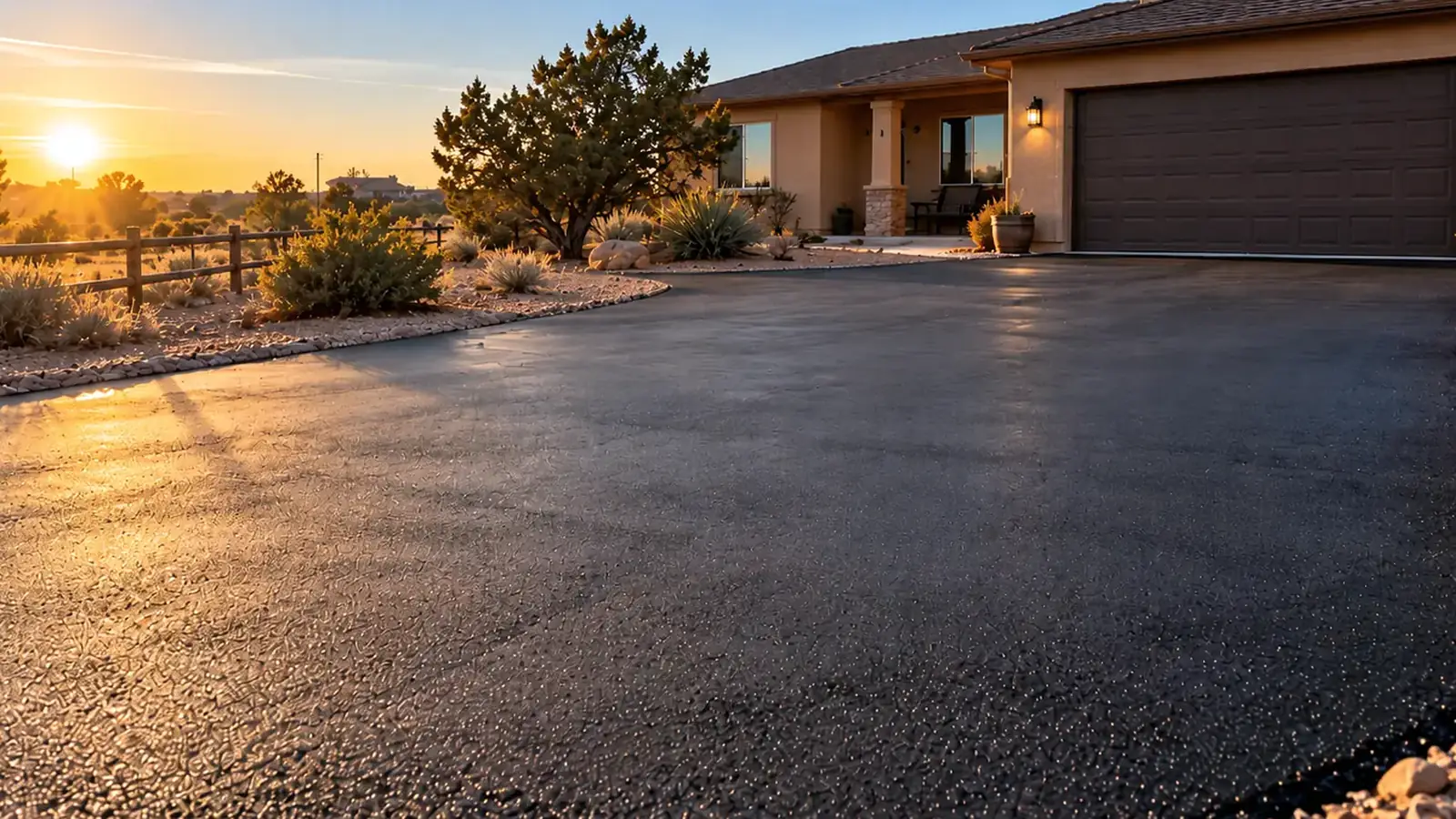
A typical Bosque Farms driveway
It's long and flat, it runs along a ditch or a pasture fence, and it carries the pickup, the horse trailer and the hay delivery. In irrigation season the ground next to it stays damp. That's where gravel ruts and old asphalt sinks at the edges.
The setup we usually suggest
At the house
Hot-mix asphalt for parking, the turnaround and anywhere you back the trailer.
Down the lane
Double chip seal or compacted millings, crowned slightly so water sheds off.
Around the barn
Compacted millings — firm underfoot and easy to scrape.
At the ditch
A properly bedded culvert crossing, with the district's okay first.
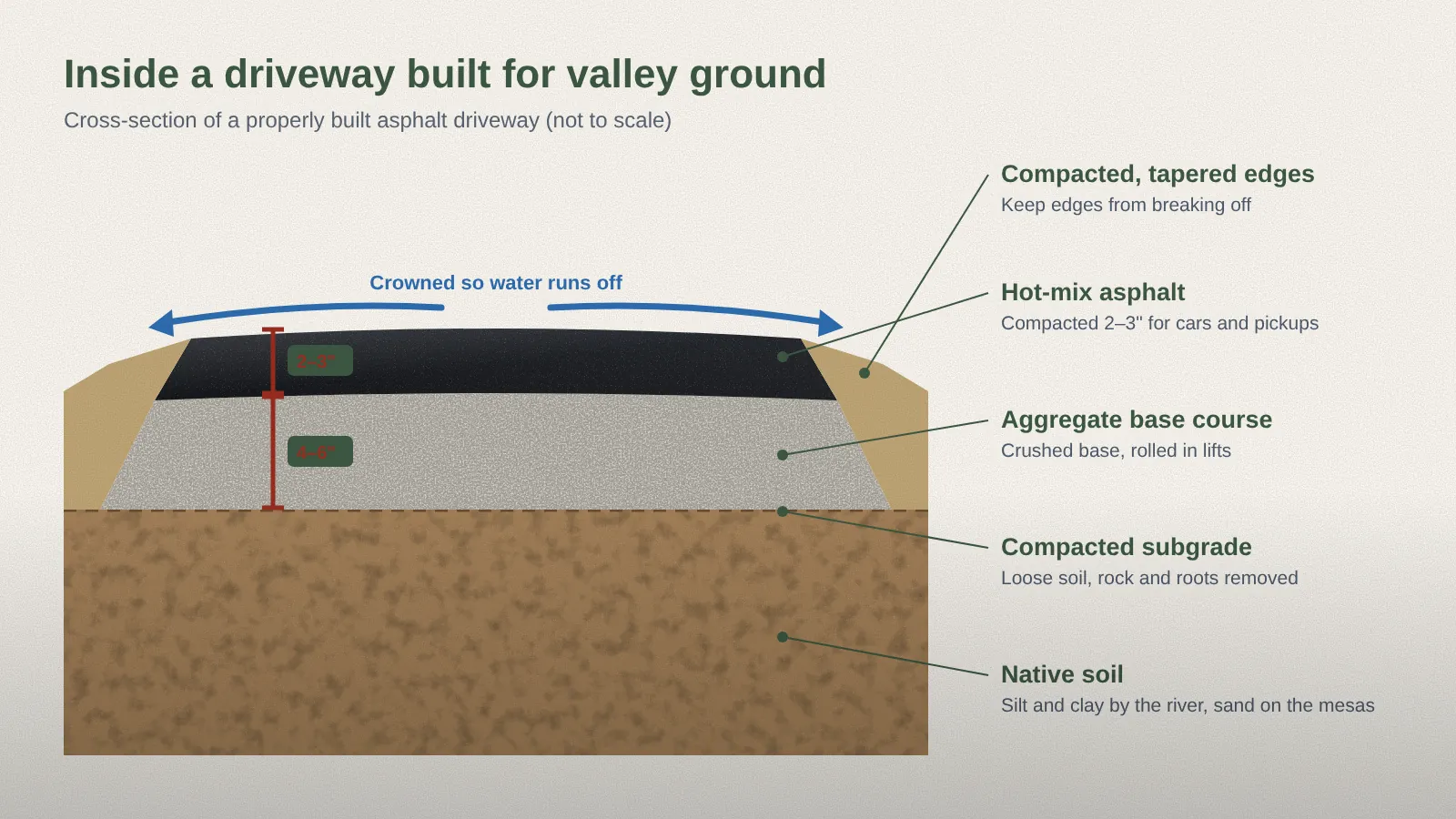
Building on damp ground
We dig out the soft, organic soil, use a thicker base, and lift the lane a little above the surrounding ground. Pavement and fill stay off ditch banks. See ditch crossings for how we handle the crossing itself.
Trailer turning
A gooseneck or stock trailer needs room. We lay out the turnaround so you can pull through or back in without dropping a wheel off the edge.
Common questions
Should the whole lane be asphalt?
It can be, but most owners save money with chip seal or millings on the long run and asphalt near the house.
Will a heavy trailer rut new asphalt?
Not with a heavier section where the trailer parks and turns. Use jack pads in summer.
Do you work inside the village?
Yes, throughout Bosque Farms.